
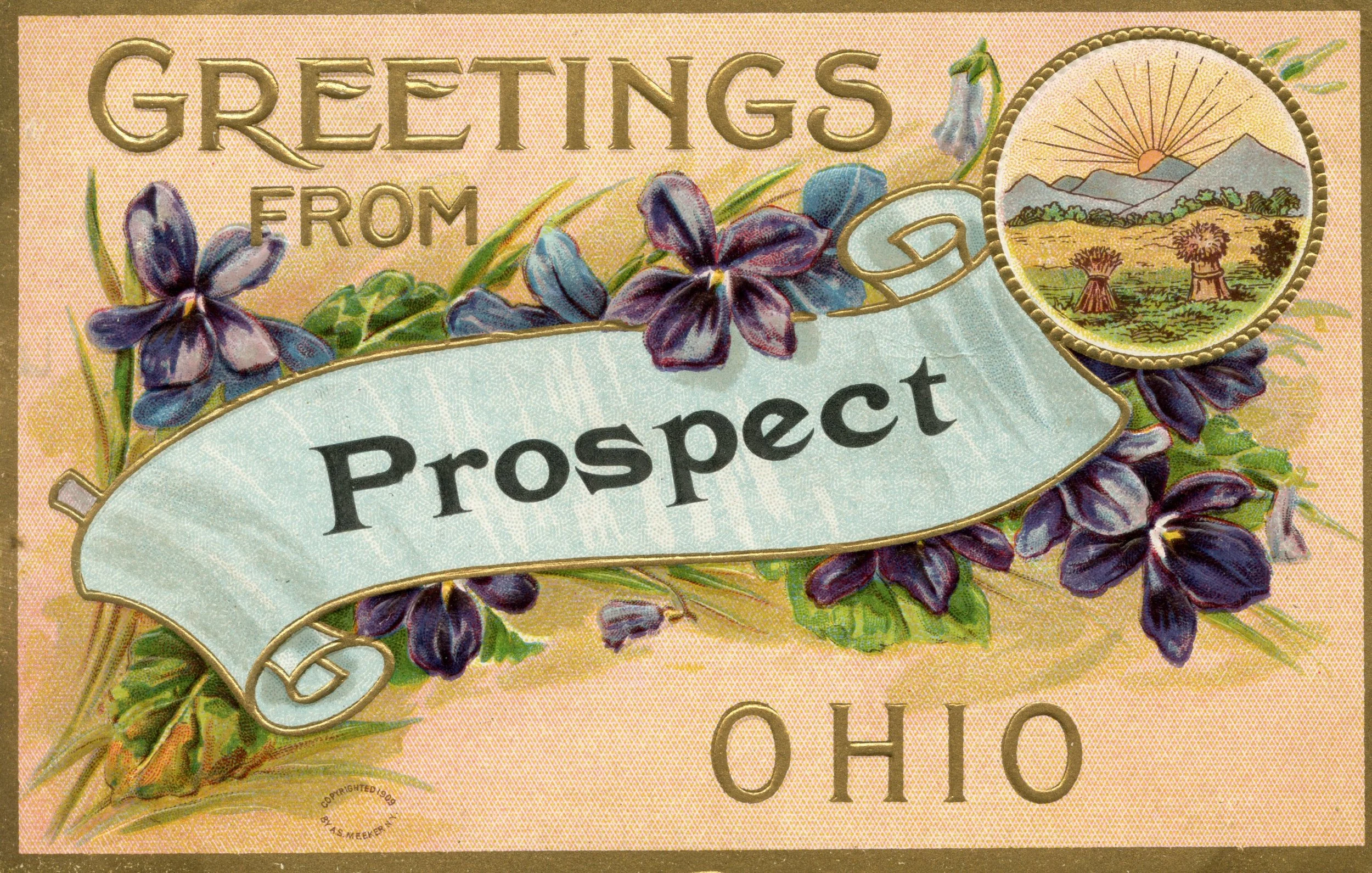
History of Prospect
Founded in 1835
The Village of Prospect situated in the fertile valley of the Scioto River was located principally on the east side of the river. The town was surveyed and laid out September 17, 1835. The plat was recorded December 28, 1835. Additions were made regularly as the town grew. Prospect originally had the name Middletown, but due to several other towns with the same name, on January 31, 1876 it was officially changed to Prospect. Prospect’s original proprietor, Christian Gast, along with his sons, travelled from Bedford County Pennsylvania with ambitions that kept pace with the village. He and his sons cleared land and raised corn and wheat.
A log cabin and a log schoolhouse were the first two buildings erected in the village, followed by a hotel, general store, gristmill, as well as a doctor’s home and office. A paper called the Prospect Monitor began weekly publications in 1878 lasting 79 years suspending operations in 1957. A brick schoolhouse was built in 1884 where the Village Office now resides.


By the turn of the century, the village had grown to have six churches and a schoolhouse that quickly became overcrowded which lead to construction of a new, larger school. Prospect also was home to a large park with a half-mile horse racetrack, a dentist, clothing and hardware stores, multiple banks and restaurants, two steam grain elevators, a post office, Town Hall, K of P & Masonic Lodges (to name a few), and so much more!


People came from miles around for water from one of the eight springs that were noted for medicinal purposes. The Gast Sanitorium was built and offered room and board to any patients suffering from cancer, due to the medicinal properties found in the spring waters.


In 1876 the Columbus, Hocking Valley & Toledo Railroad was built through the eastern portion of the village and it gave quick transportation to larger cities. The C.D. and M. Railroad was built and there were 44 passenger trains that stopped daily along with numerous freight trains. The “Gazelle” a fairly good sized steam boat sailed along the river carrying up to 25 passengers who paid a faire of 25 cents. This mode of transportation ceased with The Good Roads Movement in the early 1900’s.


Also known as Ohio’s worst weather disaster, the Great Flood of March 1913 caused the Scioto River to crest 9 feet above flood stage which lead to severe, widespread devastation after four days of heavy rain totaling 7-11 inches not just throughout the village, but all over the region. The flood caused extensive damage to homes, businesses and infrastructure across central Ohio, ultimately leading to significant improvements in flood control and the development of conservancy districts.


The Village gained a volunteer fire department and in 1939 purchased two engines from the Prospect Fire Company that was housed in the building that later became the Prospect Milk Company.
The Sunswim Pool opened in 1959 and a bathhouse was constructed in 1962. The village took over pool operations in 1996. The park was purchased in 1926 from Virginia Gast. During the depression years WPA labor was used to construct the stone wall, the quarter mile running track and a grandstand that was torn down some years ago.
The Prospect Farmers Exchange was formed in 1920 by a group of stockholders and in 1954 a feed processing plant was added. In 1955, concrete silos for grain storage were erected, as well as the first grain dryer and equipment for handling wet grain was installed.


The Prospect Electric Company was created in 1937 with street lights and two traffic lights being installed downtown in 1939.
The Prospect Municipal Waste Water Treatment plant began operations in 1977.
The present mayor, Sandee Lauer, is the village’s first female mayor.